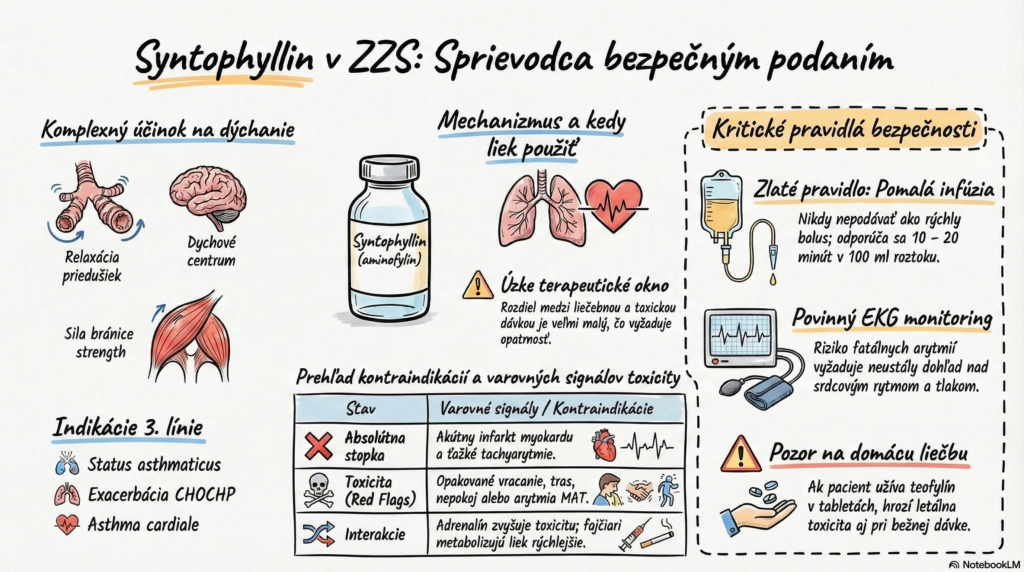

Introduction Syntophyllin is an acyclic compound of theophylline with ethylenediamine (aminophylline), which increases its solubility and allows parenteral administration. It belongs to the methylxanthine group. In EMS it’s used for severe asthma and COPD exacerbations unresponsive to initial inhaled therapy, and in specific cases of cardiac asthma.
1. Drug Identification
- Active substance: Aminophyllinum (a mixture of theophylline and ethylenediamine).
- Trade name in Slovakia: Syntophyllin.
- ATC classification: R03DA05 (Xanthines).
- Dosage form in EMS: Injection solution 240 mg/10 ml (ampule).
- Pharmacological group: Bronchodilator, methylxanthine.
2. Mechanism of Action (Pharmacodynamics) Syntophyllin has a complex, non-selective mechanism of action:
- Phosphodiesterase (PDE) inhibition: Non-selectively blocks PDE isoforms (particularly PDE III and IV), raising intracellular cAMP levels. This relaxes bronchial smooth muscle.
- Adenosine receptor antagonism: Blocks A1 and A2 receptors, preventing adenosine-induced bronchoconstriction and histamine release.
- Respiratory center stimulation: Increases sensitivity of the medullary respiratory center to carbon dioxide (CO2).
- Diaphragm effect: Increases diaphragmatic contractility, easing ventilation in exhausted patients.
3. Hemodynamic Effects – IN DETAIL Syntophyllin is known for its narrow therapeutic window and significant cardiovascular effects:
- Heart: Positive inotropic (force) and chronotropic (rate) effect. Increases cardiac work and myocardial oxygen consumption.
- Blood pressure: May cause a mild rise in systolic BP and a drop in peripheral resistance. Rapid administration risks sudden hypotension.
- Arrhythmogenic potential: Markedly increases risk of supraventricular and ventricular arrhythmias (particularly in elderly and hypoxic patients).
- Diuretic effect: Mild stimulatory effect on renal filtration.
4. Pharmacokinetics (from a Paramedic’s Perspective)
- Route of administration: Exclusively IV (very slowly!) or as an infusion.
- Onset of action: Nearly immediate with IV administration, but a clinically meaningful effect takes 15–30 minutes.
- Metabolism: Hepatic (CYP450 enzymes). Metabolism is extremely variable (affected by smoking, age, medications).
- Elimination: Renal.
5. Indications in Prehospital Practice
- Status asthmaticus: As a third-line drug if nebulization and IV magnesium fail.
- Severe COPD exacerbation: Particularly with signs of respiratory muscle exhaustion.
- Cardiac asthma: Adjunctive treatment to ease bronchospasm in pulmonary edema (reduces preload and afterload, improves contractility).
- Neonatal apnea: (In specialized transports.)
6. Dosing in EMS
- Loading dose (in a patient not taking theophylline): 5 mg/kg body weight. In EMS, an adult commonly receives 240 mg (1 ampule) IV.
- Administration rate: Critical! Given over a minimum of 10 to 20 minutes. Safest is 1 ampule diluted in 100 ml normal saline or 5% dextrose.
- Scope of practice: Physician (RLP). A basic-crew paramedic (RZP) — administration in Slovakia is tied to physician presence or very strict protocols due to toxicity.
7. Contraindications
- Absolute: Acute myocardial infarction, severe tachyarrhythmias, hypersensitivity to theophylline or ethylenediamine.
- Relative: Hyperthyroidism, epilepsy (lowers seizure threshold), peptic ulcers (increases HCl secretion), severe liver damage.
8. Adverse Effects
- Cardiac: Tachycardia, palpitations, ventricular extrasystoles.
- Gastrointestinal: Nausea, vomiting (often the first sign of toxicity).
- Neurological: Restlessness, tremor, insomnia, grand mal seizures (with overdose).
9. Drug Interactions in EMS
- Sympathomimetics (epinephrine, Ventolin): Synergistic increase in toxicity and arrhythmia risk.
- Ciprofloxacin / erythromycin: Reduce theophylline clearance, increasing overdose risk.
- Smoking: Smokers need higher doses due to faster hepatic metabolism.
10. Specifics in Emergency Medicine
- Error #1: “Pushing” it in. A rapid 240 mg bolus can trigger sudden cardiac arrest or fatal ventricular tachycardia.
- Error #2: Ignoring the history. If the patient already takes oral theophylline (e.g., Euphyllin, Afonilum), the EMS loading dose must be halved or withheld entirely (risk of lethal toxicity).
- Monitoring: Continuous ECG monitoring and BP measurement are mandatory during administration.
11. Red Flags
- Coffee-ground vomiting: A sign of severe toxicity and GI bleeding.
- Multifocal atrial tachycardia (MAT): A specific arrhythmia often associated with methylxanthine toxicity in COPD.
- Tremor and restlessness: If worsening, seizures may follow.
12. Antidote
- None exists. For overdose: beta-blockers (with caution in asthma!), diazepam for seizures, hemoperfusion (in hospital).
13. Practical Field Scenario Situation: A 68-year-old smoker, COPD, in respiratory distress for 2 days. Used Ventolin at home without effect. Silent chest, SpO2 82%. Status: Exhausted, somnolent, tachycardic (115/min). Decision-making:
- Oxygen therapy, nebulized Ventolin + Pulmicort.
- Hydrocortisone 200 mg IV.
- Syntophyllin 240 mg in 100 ml normal saline (slow infusion over 20 minutes). Hemodynamic rationale: Syntophyllin acts here as a “last resort” — it stimulates the diaphragm and respiratory center, dilating airways that nebulized medication can’t reach.
14. Practical Summary – 5 Key Points
- Slow is the only safe way: At least 15 minutes as an infusion.
- Ask about tablets: Does the patient take theophylline at home? If so, IV Syntophyllin is high risk.
- ECG is mandatory: Never administer without rhythm monitoring.
- A third-line drug: Use Ventolin, corticosteroids, and magnesium first.
- Watch the older heart: Arrhythmia risk is extremely high in seniors with coronary artery disease.
Professional Sources and Literature:
- SmPC (Summary of Product Characteristics) – Syntophyllin injection solution 240 mg/10 ml.
- GOLD 2024: Global Strategy for the Diagnosis, Management, and Prevention of COPD.
- Dobiáš, V. et al.: Emergency Healthcare. Osveta, 2021.
- Lüllmann, H. et al.: Pharmacology and Toxicology. Grada, 2014.
- European Respiratory Society (ERS): Guidelines on the management of acute respiratory failure.