Introduction Apaurin (diazepam) is a long-acting benzodiazepine with marked anxiolytic, anticonvulsant, sedative, and muscle-relaxant effects. In emergency medicine it’s the first-line drug for acute epileptic seizures (status epilepticus), febrile seizures in children, and acute agitation or anxiety states.
1. Drug Identification
- Active substance: Diazepamum.
- Trade names in Slovakia: Apaurin (injection), Diazepam (tablets / rectal tube).
- ATC classification: N05BA01 (Anxiolytics, benzodiazepine derivatives).
- Dosage form in EMS:
- Injection solution 10 mg/2 ml.
- Rectal tube 5 mg or 10 mg (mainly for pediatrics).
- Pharmacological group: Benzodiazepine.
2. Mechanism of Action (Pharmacodynamics) Diazepam indirectly stimulates the brain’s inhibitory neurotransmitter system:
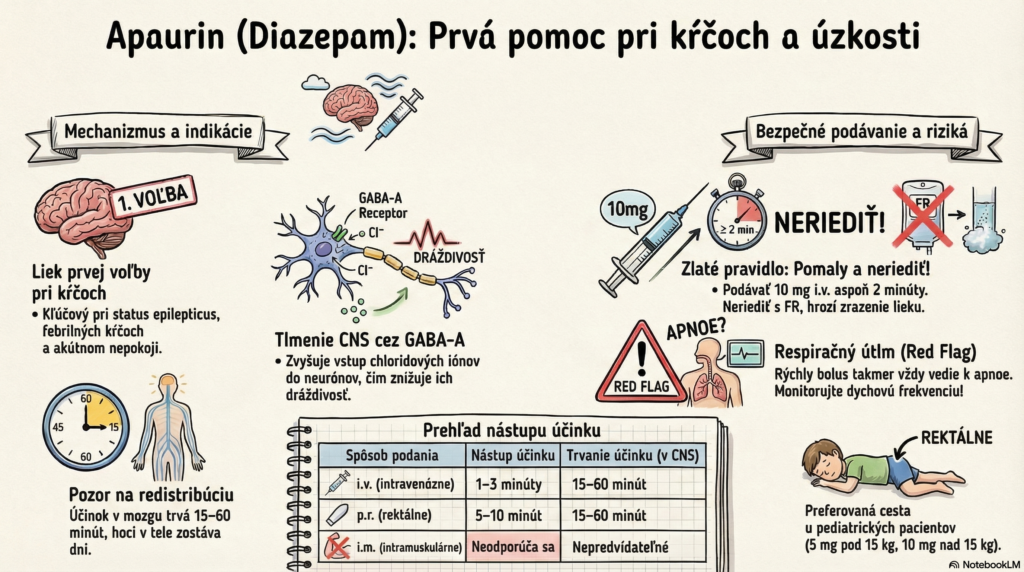
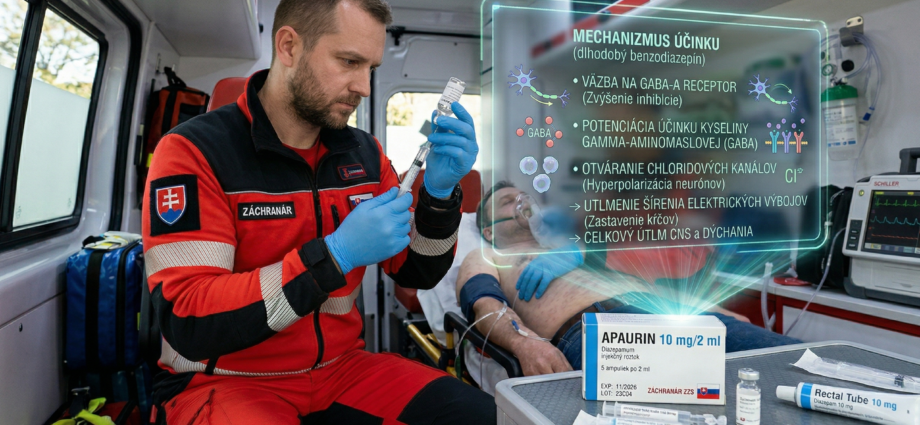
- GABA-A receptor binding: Diazepam binds to a specific benzodiazepine binding site on the gamma-aminobutyric acid (GABA) receptor.
- Potentiation of inhibition: Increases the receptor’s affinity for GABA itself, leading to more frequent opening of chloride channels.
- Hyperpolarization: Chloride ion influx into the neuron hyperpolarizes it, making it less excitable.
- Result: Suppression of the spread of electrical discharges in the brain (stopping seizures) and overall CNS depression.
3. Hemodynamic Effects – IN DETAIL
- Blood pressure: At standard doses, mild drop in systolic pressure from general sedation. Hypotension risk rises with rapid IV administration or combination with other depressant substances (alcohol, opioids).
- Heart rate: Mild decrease (bradycardia) secondary to sedation.
- Respiratory system: Critical risk of respiratory center depression! Diazepam reduces CO2 sensitivity and respiratory rate. Apnea risk is high, especially with a rapid IV bolus.
4. Pharmacokinetics (from a Paramedic’s Perspective)
- Routes of administration:
- IV: Fastest effect for seizures (give slowly into a large vein).
- PR (rectal): Preferred in children or when IV access isn’t possible.
- IM: Not recommended in EMS (slow, unpredictable absorption, tissue irritation).
- Onset of action: IV administration: 1–3 minutes; rectal: 5–10 minutes.
- Peak effect: IV: nearly immediate.
- Duration of effect: 15–60 minutes (redistribution from brain to fatty tissue), but elimination half-life is very long (20–50 hours).
- Metabolism: Hepatic. Has active metabolites (nordiazepam).
5. Indications in Prehospital Practice
- Status epilepticus / acute seizures: Of any origin (metabolic, traumatic, febrile).
- Acute anxiety and agitation: Panic attacks, acute stress reactions.
- Sedation before procedures: E.g., before electrical cardioversion (if midazolam isn’t available).
- Muscle spasms: Tetanus or acute painful muscle contractures.
- Withdrawal syndrome: Delirium tremens in alcoholism.
6. Dosing in EMS
- Adult (seizures): 10 mg IV (slowly, approximately 2–5 mg per minute). May be repeated after 10 minutes up to a total dose of 30 mg.
- Pediatrics (rectal): Children under 15 kg: 5 mg; over 15 kg: 10 mg.
- Pediatrics (IV): 0.2–0.3 mg/kg body weight.
- Scope of practice: Physician (RLP). A basic-crew paramedic (RZP) — administering diazepam (particularly rectally) is a standard competency for seizure management in Slovakia.
7. Contraindications
- Absolute: Myasthenia gravis (risk of total muscle weakness), severe respiratory insufficiency, hypersensitivity, acute intoxication with depressant substances (alcohol).
- Relative: Shock states, elderly patients (fall and confusion risk), angle-closure glaucoma.
8. Adverse Effects
- Respiratory: Hypoventilation, apnea.
- Neurological: Somnolence, ataxia (coordination impairment), paradoxical excitation (particularly in children and seniors — agitation instead of sedation).
- Local: Thrombophlebitis with IV administration (the solution is irritating; dilute or flush).
9. Drug Interactions in EMS
- Opioids (fentanyl, morphine): Significant potentiation of respiratory depression.
- Alcohol: An extremely dangerous combination (risk of fatal CNS and respiratory depression).
- Muscle relaxants: Amplified effect.
10. Specifics in Emergency Medicine
- Error #1: A rapid bolus. Giving 10 mg IV over 5 seconds almost always causes apnea. Monitor breathing!
- Error #2: Dilution. Apaurin can precipitate (cloud) when mixed with normal saline in a syringe. It’s recommended to give it undiluted into a running infusion line.
- Safety: When giving it IV, always have a bag-valve-mask and airway equipment ready.
11. Red Flags
- Bradypnea: If respiratory rate drops below 8–10/min, assist ventilation.
- Hypotension: If BP drops significantly, consider positioning and fluids.
- Paradoxical reaction: If the patient becomes more aggressive after administration, do not give further benzodiazepine doses.
12. Antidote
- Flumazenil (Anexate): A specific antagonist that reverses the benzodiazepine effect (covered in a separate article).
13. Practical Field Scenario Situation: A 30-year-old man found on the street in tonic-clonic seizures. Seizures have continued uninterrupted for 5 minutes. Status: Facial cyanosis, foaming at the mouth, GCS 3. Decision-making:
- Head protection, oxygen therapy.
- Secure IV access (if not possible, 10 mg PR).
- Apaurin 10 mg IV, slowly (over 2 minutes).
- Monitor seizure cessation and return of spontaneous breathing. Hemodynamic rationale: Seizure activity extremely depletes oxygen reserves. Apaurin stops the seizures, allowing reoxygenation, but we must watch that we don’t cause apnea with the drug itself.
14. Practical Summary – 5 Key Points
- Slowly into the vein: At least 2 minutes for 10 mg.
- Breathing is priority: Benzodiazepines and apnea go hand in hand.
- Rectal for children: Fast and safe at home.
- Don’t dilute with saline: Give it directly to avoid drug precipitation.
- Status epilepticus: Diazepam is your first soldier on the field.
Professional Sources and Literature:
- SmPC (Summary of Product Characteristics) – Apaurin injection solution 10 mg/2 ml.
- Slovak Ministry of Health guidance on the treatment of status epilepticus.
- Dobiáš, V. et al.: Emergency Healthcare. Osveta, 2021.
- Lüllmann, H. et al.: Pharmacology and Toxicology. Grada, 2014. (Chapter: Psychopharmaceuticals.)
- ILCOR / ERC Guidelines: Recommendations for field seizure management.