Introduction Torecan is a phenothiazine derivative with strong antiemetic and antivertigo effects. In emergency medicine it’s used mainly to suppress nausea and vomiting of central origin and to treat acute vertigo. Unlike prokinetics (metoclopramide), it acts directly on the vestibular apparatus and the chemoreceptor trigger zone in the CNS.
1. Drug Identification
- Active substance: Thiethylperazinum.
- Trade name in Slovakia: Torecan.
- ATC classification: R06AD03 (Phenothiazine derivatives).
- Dosage form in EMS: Injection solution 6.5 mg/1 ml (ampule).
- Pharmacological group: Antiemetic, antivertigo agent (neuroleptic).
2. Mechanism of Action (Pharmacodynamics) Torecan exhibits non-selective antagonist activity at multiple receptor levels:
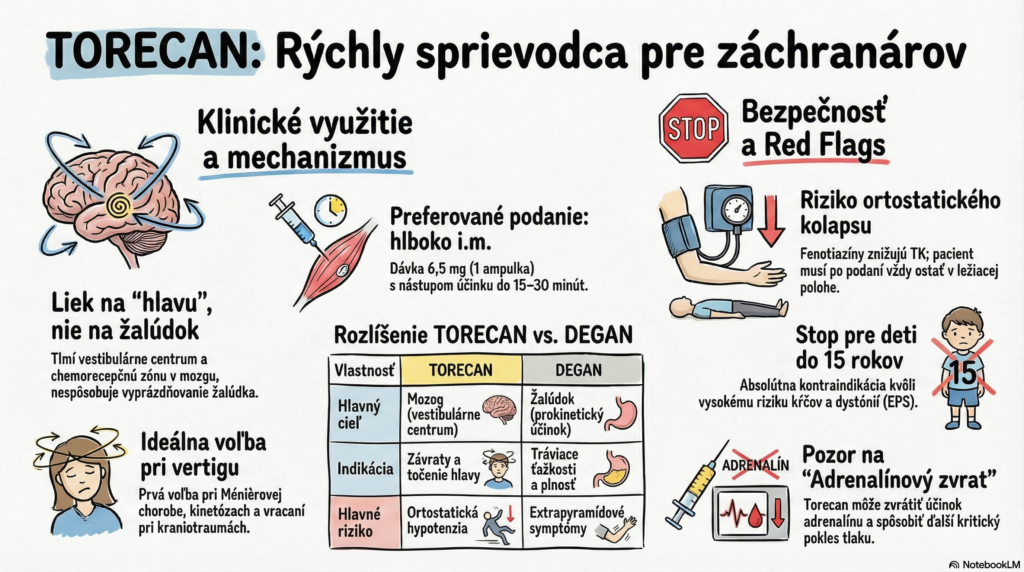
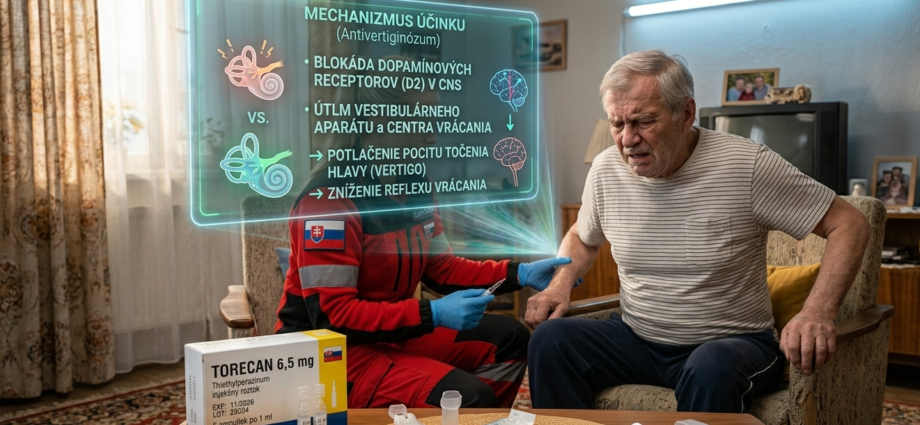
- Dopaminergic blockade (D2): Suppresses the chemoreceptor trigger zone (area postrema) in the medulla.
- Histaminergic and cholinergic blockade: Acts directly on the vomiting center and the vestibular apparatus in the inner ear.
- Result: Stabilization of the vestibular system, suppression of the sensation of spinning, and blockade of the vomiting reflex.
3. Hemodynamic Effects
- Blood pressure: Risk of orthostatic hypotension. As a phenothiazine, it can cause a drop in systemic BP, particularly in geriatric patients or with rapid IV administration.
- CNS: Has a mild sedative effect, which can help calm an agitated patient with severe vertigo.
4. Pharmacokinetics
- Routes of administration: Preferably IM (deep intramuscular injection); in indicated cases, IV (very slowly, patient lying down).
- Onset of action: With IM administration, approximately 15–30 minutes.
- Duration of effect: 4–6 hours.
- Metabolism: Hepatic. Elimination via bile and urine.
5. Indications in EMS
- Vertigo: Ménière’s disease, vestibular neuritis, motion sickness.
- Nausea and vomiting: Postoperative, uremic, or intracranial in origin (if depression of consciousness isn’t a contraindication).
- Adjunctive treatment in migraine.
6. Dosing
- Adults: 6.5 mg (1 ampule) IM, or very slowly IV.
- Children: Contraindicated in Slovakia in children under 15 years.
7. Contraindications and Risks
- Absolute: States of deep unconsciousness (CNS depression), children under 15 years (high risk of extrapyramidal disorders), phenothiazine hypersensitivity.
- Relative: Hypotension, prostatic hypertrophy, glaucoma (anticholinergic effect).
- Adverse effects: Extrapyramidal symptoms (EPS) — acute dystonia, oculogyric crises (upward eye deviation), tremor.
8. Specifics for the Paramedic
- Diagnosis: Before treating vertigo, always rule out a posterior-fossa stroke (nystagmus testing, ataxia).
- Safety: The patient must not stand up abruptly after administration due to collapse and fall risk.
- Incompatibility: Epinephrine given after Torecan can cause a further BP drop (so-called “epinephrine reversal”).
Professional Literature and Sources
- Dobiáš, V. et al. (2021): Emergency Healthcare. 3rd edition. Martin: Osveta.
- Šuleková, M., et al. (2023): Pharmacology for Paramedics. Bratislava: Herba.
- SmPC (Summary of Product Characteristics) – Torecan. Slovak State Institute for Drug Control (ŠÚKL).
- Lüllmann, H., Mohr, K., Hein, L. (2014): Pharmacology and Toxicology. 2nd Czech edition. Prague: Grada.
- Slovak Ministry of Health guidance on treatment procedures for acute conditions with nausea and vomiting.